
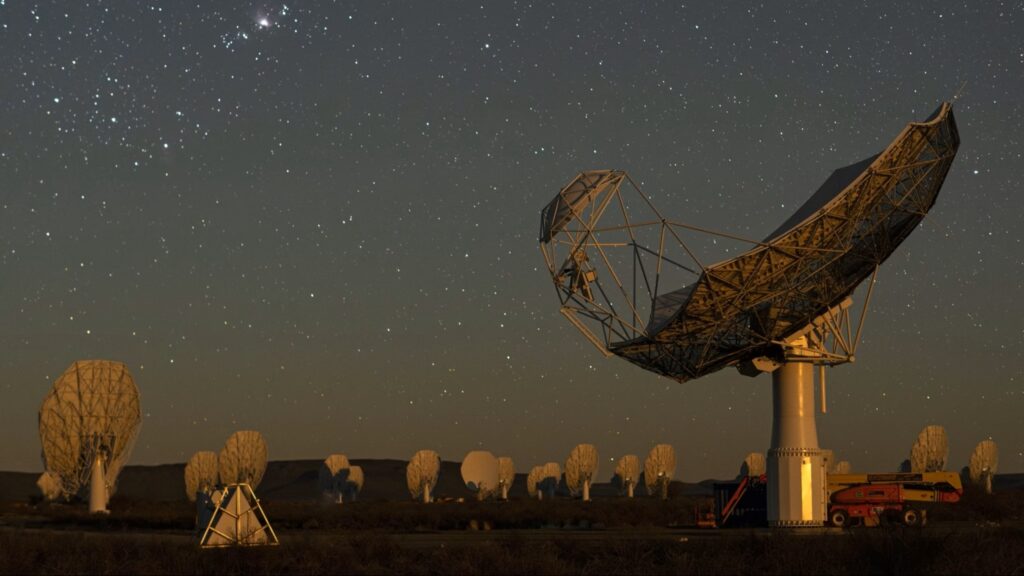
For centuries, Africa’s clear, dark skies have been an untapped natural resource. Today, that is changing. With the arrival of flagship projects like MeerKAT and the African Very Long Baseline Interferometry (A-VLBI) Network, the continent is converting its geographic advantage into a high-tech engine for the global astronomical research and knowledge economy.
While astronomy is often viewed through the narrow lens of pure science, its real-world returns extend far beyond the telescope lens. In an ecosystem where scientific investment is the primary driver of socio-economic growth, the stars are providing a blueprint for innovation. These projects are not just mapping galaxies; they are building high-level analytical talent, stress-testing big-data infrastructure, and sparking entrepreneurship in corners of the continent once left behind.
The evidence is clear: astronomy can drive meaningful socio-economic development in Africa when investments are aligned with government priorities and focused on long-term human capacity building. Beyond delivering world-class science, astronomy creates jobs, develops transferable skills, and generates revenue across multiple sectors, from tourism and education to technology and industry. The question for policymakers is no longer whether astronomy delivers returns, but whether they will invest in capturing them.